

August is the month when I was reborn.
Every year this week, I receive hundreds of happy birthday wishes by email, WhatsApp and SMS messages. All from companies who have my business: banks, insurance companies, mutual funds, hotels where I stayed some time, mobile and Internet service providers, online payment services, travel booking websites, magazines and apps I subscribe to, and such. Not a single message comes from my friends or relatives.
That’s because I was not born in August. I was just reborn.
Iss janamdin ka koi aadhar nahin hai, I told myself this week. (This birthday has no basis.)
Like many Indians of my generation, I have an “official” date of birth, which is different from my “unofficial”, err… the real one. Registration of births and deaths was not mandatory until April 1970. The date of birth was typically recorded when the child was going to school for the first time.
I started my student life in a small school in the government staff quarters in the coastal Berhampur town in Orissa. I can visualise, my father carried me on his lap to the school when I was being too unruly at home, asking the headmaster to enrol me. Schools had to record the child’s date of birth at admission, as this would be needed for school-leaving documents in the future. School registration was the only source of date of birth that stood the test of time for the rest of the child’s life.
My father gave the headmaster an imaginary date of birth, making me one-and-half years younger than I was. He had done the same for his older two children.
Why did he do that, I wonder. There could be a few reasons. First, schools wanted to get younger children on their rolls: giving them a headstart in school was a matter of pride for parents. Going by my fictitious birth date, I would be younger than the rest of the children in the class. How smart would I look if I performed better than my older classmates! Although, I suspect parents of other children were not devoid of this smart idea or practice. So the advantage probably was also imaginary.
Second, completing eduction at a younger age, by that logic, would give me an edge over the others in the competition for government jobs, which was the dream of all parents in those days. A younger candidate might be preferred over the older ones.
Third, entering the government workforce at a lower age would give me a longer service period until retirement. That would mean more years of labour, poor me, but also higher pension, lucky me!
There could be a couple of other reasons, not necessarily pecuniary. If I were a girl, a lower age would increase my marketability as a potential wife. In any case, youth — for both boys and girls — enhanced the individual’s social status.
But most commonly, many people had fictitious birth dates because their parents simply did not know or remember the date. People in rural areas used to remember life events like births, weddings and deaths by the season, a historical event or a natural calamity, and rarely by the specific date. If I asked my grandmother when my father was born, she would say: “Je bochhor Dakshin Khulna-e durvikkho hoyilo, taar porer bocchor.” (The year after the famine hit southern Khulna.) That would put his birth in 1922, but his documents, which were made many decades later, used a different year. It was a common phenomenon.
So my fake birth date perpetuated in documents I procured in life after school: educational certificates, employment records, passport, government ID documents such as Aadhar card, voter card, tax payer card, and pension documents. No one ever questioned it. I secured jobs in more than 10 organisations, some of them international, so I travelled and lived in other countries as an “Indian” passport holder. I opened bank accounts, sent home money from abroad, got credit cards and loans, built homes, and received a certificate of appreciation from the government in recognition of my “contribution towards building this great Nation” by paying taxes.
But fakery has the tendency to catch you on the wrong foot. Last month, I stood in long queues of voters, many of them seniors to me so most likely with fake births like me, to prove that I had the right to be on the voter list.
It was not only a matter of my democratic right. I was worried that not being a voter could lead one day to not being counted as a citizen, although Indian law says that I am a citizen simply because I was born here before 30 June 1987. That is a risk millions of citizens shared when they went through the Special Intensive Revision (SIR) process in several states. The Election Commission protested that citizenship was not on the mark, but there were reports of people ousted from the voter list being refused welfare benefits on the ground that they were not citizens any more.
The worry was not baseless: none of the documents issued by the government, from the voter ID and Aadhar card to my passport, was considered to be a conclusive proof of my citizenship. The only conclusive document was a birth certificate with date and place of birth which I didn’t possess.
Worry not, my Booth Level Officer (BLO) said. She assured me that as long as I can provide details of me being on the voter list from 2006, when the last SIR took place in my state, it will not be a problem. Otherwise, I could provide evidence of my father or mother’s voter status from around that time. I could then be “mapped” to such evidence and accepted as a genuine voter.
I moved frequently in my 35-year working life, so couldn’t vote in any election until 2024. But I took care to remain in the voter list all along. I dug out my details from the 2003 voter list of Uttar Pradesh, where we lived at the time and put it in the voter enumeration form, and attached my existing identity documents.
When the draft voter list came out, I rushed to check, and found that my name was in the rolls. Voila! I was about to cheer, when the BLO came back with notices issued to most of my neighbours, and me, to supply further documents for verification. Many of them were in similar situation, without birth certificates and no proof-worthy references to their parents’ voter status.
The BLO asked me to submit a copy of my Aadhar card, the official unique identity document that were “live” (or active) for more than 95% residents in India (including foreigners) in March this year. Because foreigners residing in India were also issued Aadhar, it is not considered a proof of citizenship. Its use is limited to proving my identity: beyond that I cannot use it as a proof of my birth date, domicile, nationality, parentage or voter eligibility. That is because, the government argued, in many cases it was issued fraudulently. I was still required to submit it as a proof of my voting right. The question remained: How do I prove that it is the same Kanti living at the current address as the person mentioned in the documents? My father could help.
The BLO looked at my Aadhar, and said, “But your father’s name is not here!”
“Baap re baap!” I scratched my head. Could I submit my passport bearing his name, I asked, or any other document? “Submit your high school exam marksheet,” she advised. That was the most acceptable proof of birth next to birth certificate because it came from the school register. The only issue is, my marksheet does not bear my birth date or my father’s name.
I was sure I could not be registered 25 years ago for such a crucial identity document like Aadhar without my father’s name. So I dug open my document archives to check where I lost the link to my father. It turns out, his name appeared in my original Aadhar card, but magically disappeared in my new card when I updated my address. So I submitted a copy of my old Aadhar card, along with my passport and my father’s voter ID card from 1996.
I wait to see if I could prove the genuineness of my birth and voter right, and thereby my citizenship, or the other way around; whether I could be mapped to my father’s existence and my relationship with him. There may be many more slips on this path yet. In my entry in the 2003 voter list, my father’s name was entered wrongly due to a typo. He died in 2000, so I could not provide his entry in the 2003 voter list. He had no passport. His regular existence in the voter rolls prior to that, for five decades since he migrated from East Pakistan, made him an Indian citizen as per the laws existing then. But how do I draw an indelible line from that to my citizenship when conclusive documents from that era are almost impossible to find?
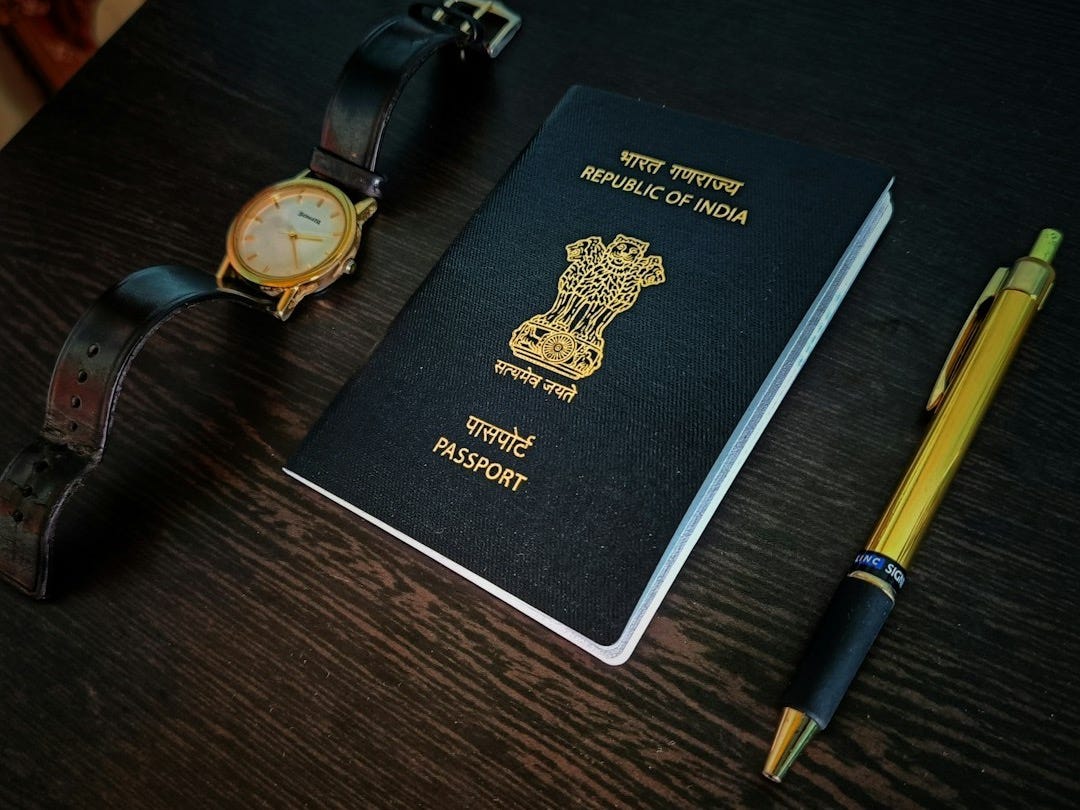
The strange existential issue for me is, I could procure so many official identity documents, including a passport, based on a simple school document, printed with the then novel dot-matrix printers whose ink has since evaporated. But all these documents have now been cast aside as no evidence of my Indianness. The passport, which is issued after physical police verification the first time and at every renewal (thrice in my case), is the most enigmatic document: the government has notified that it is only a travel document, not proof of my nationality.
I think of all the times I presented the passport to immigration officials around the world as proof of my Indian citizenship. I think of the time when I lost my passport en route Brussels, and the Indian embassy there issued me a new passport within a few hours. Did the embassy issue it to me simply because I needed a travel document to return home?
What map of India is it where I do not belong?
(The writer is a former journalist and communication professional.)
The pun,the pain ,the futility of this manipulated exercise only highlights the current mood of the country.
Many states have undergone this fraud called SIR before the elections in their respective states.
We as The CITIZENS of the country can well imagine what all is going on.....
Well written.
One among the lakhs who found it difficult to prove the status of my mother ,father in law ,self etc etc .
What an incredible feat and story, Kanti! To have to prove your identity in your own country. As always, you write so well 👏